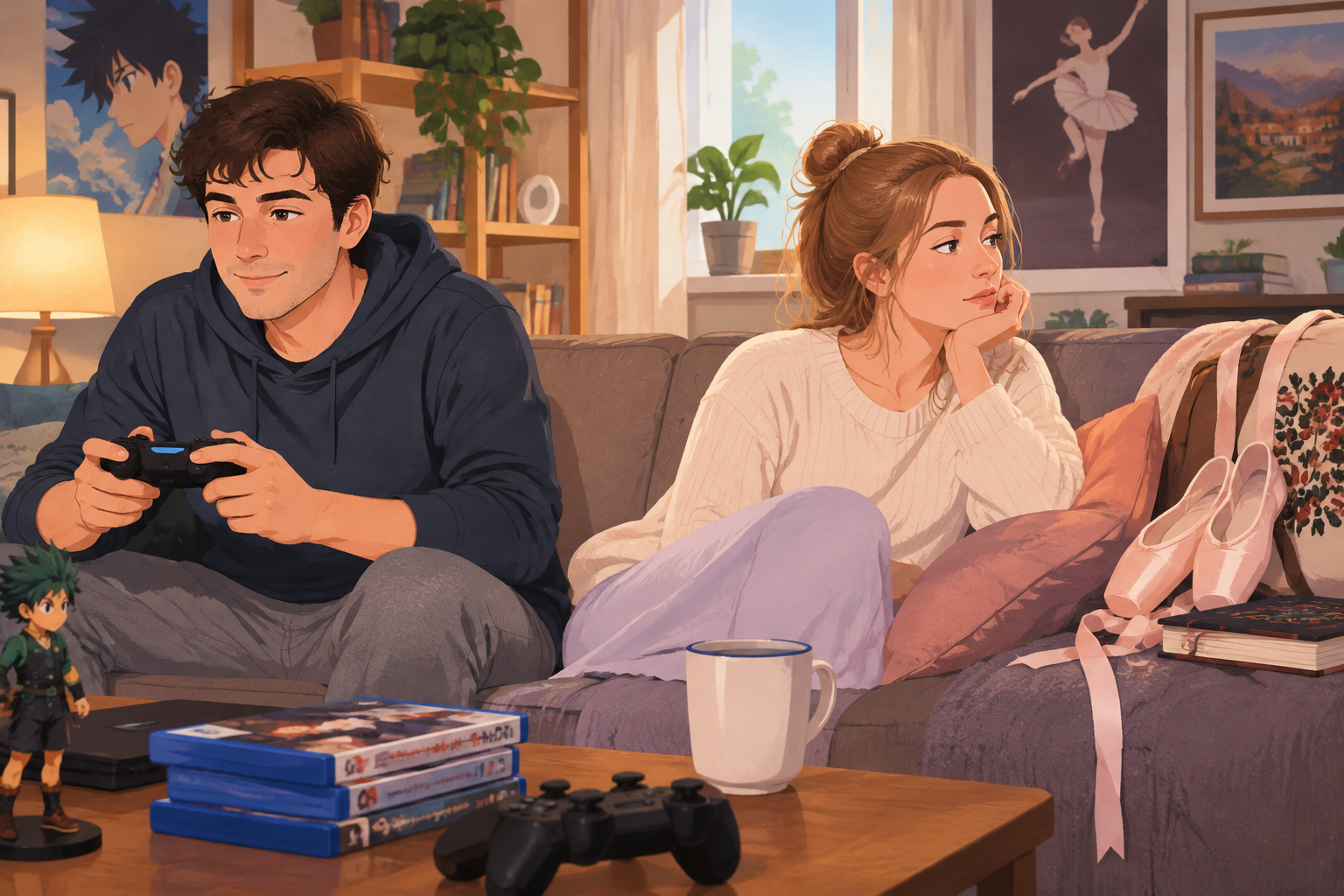
I’m 24, my girlfriend is 24, and we’ve been together for almost five years. We generally get along, and we don’t fight often. But lately I’ve been wondering how two people can spend that long together and still feel like strangers in one pretty important corner of their lives.
I’m a nerdy guy. I like video games and anime. She’s more into ballet, local folklore, and other things that aren’t really my usual scene. Still, I’ve always tried to join her in the things she loves. I’ve gone to recitals, watched movies based on books she likes, gone to the countryside with her, and listened to her music. I don’t have to love every activity to enjoy seeing her enjoy it.
I wanted that same kind of openness from her. I’ve tried to share my hobbies, but she’s often met them with apathy or a snide comment. If a game looked strange to her, she’d make fun of it. Over time, I stopped bringing those things up. When she asked what I was doing, I’d give her the blandest possible answer—“watching TV,” for example—instead of saying I was playing a game.
I wasn’t happy about hiding part of my life, but I told myself it was easier to keep those interests for my friends who shared them. I’d already talked to her about this twice before. I didn’t expect her to become a gamer or an anime fan. I just wanted her to ask about the things I cared about and show a little interest.
Recently, something happened in front of our friend group that made it painfully clear she didn’t know me very well. I’ll leave out the details because they aren’t the point. After almost five years together, having that become obvious in front of everyone felt like a kick in the gut. On the ride home, I finally told her how disappointed I was. I’ve asked about her interests and could easily answer the same kinds of questions she couldn’t answer about me. The rest of the drive was silent.
The next day was my birthday. I told her I didn’t want to talk about the issue that day and that we could talk later. When we did, I laid out what had been bothering me, including specific examples of the times she’d insulted my hobbies and how that had made me pull back. She apologized. For a moment, I thought we were getting somewhere.
Then she said that my not talking to her about my hobbies was my fault because I hadn’t approached her with them. I reminded her that I had tried, and that her apathy and comments were why I stopped. She glossed over that and said she was sorry for everything—including the things that were my fault. When I asked what she thought I’d done wrong, she said she was willing to take responsibility for it anyway.
That left me more frustrated than before. I wasn’t asking for a blanket apology or expecting her to like everything I like. I wanted her to understand why I’d withdrawn and, hopefully, make an effort to be curious. I told her an apology didn’t mean much if she didn’t actually think she’d done anything wrong. She said I was misunderstanding her, got angry, and went to bed.
I know I could have handled my hurt differently, but I don’t think I was wrong to explain why I’d stopped sharing things with her. Now I’m wondering whether I should have accepted the apology simply because she offered it—or whether it’s fair to want her to understand what she’s apologizing for.